
One of the key objectives of the HMI2MARKET project is to strengthen collaboration between higher education institutions, innovation actors, students, researchers, and industry communities. Through its activities, the project encourages partnerships that go beyond individual project outputs and contribute to the long-term development of innovation ecosystems.
A strong example of such cooperation is the partnership established between the University Sarajevo School of Science and Technology (SSST) and Google Developer Group (GDG) Sarajevo. The collaboration was formalized through a Memorandum of Understanding signed in April 2025, creating a foundation for future joint activities focused on knowledge exchange, student engagement, innovation, and community development.
The motivation behind the partnership came from a shared interest in connecting academic knowledge with practical industry experience and creating more opportunities for students and young professionals to engage with the local technology ecosystem. Both partners recognized the importance of building stronger links between higher education and innovation communities in Bosnia and Herzegovina, particularly in fast-growing digital and creative industries.
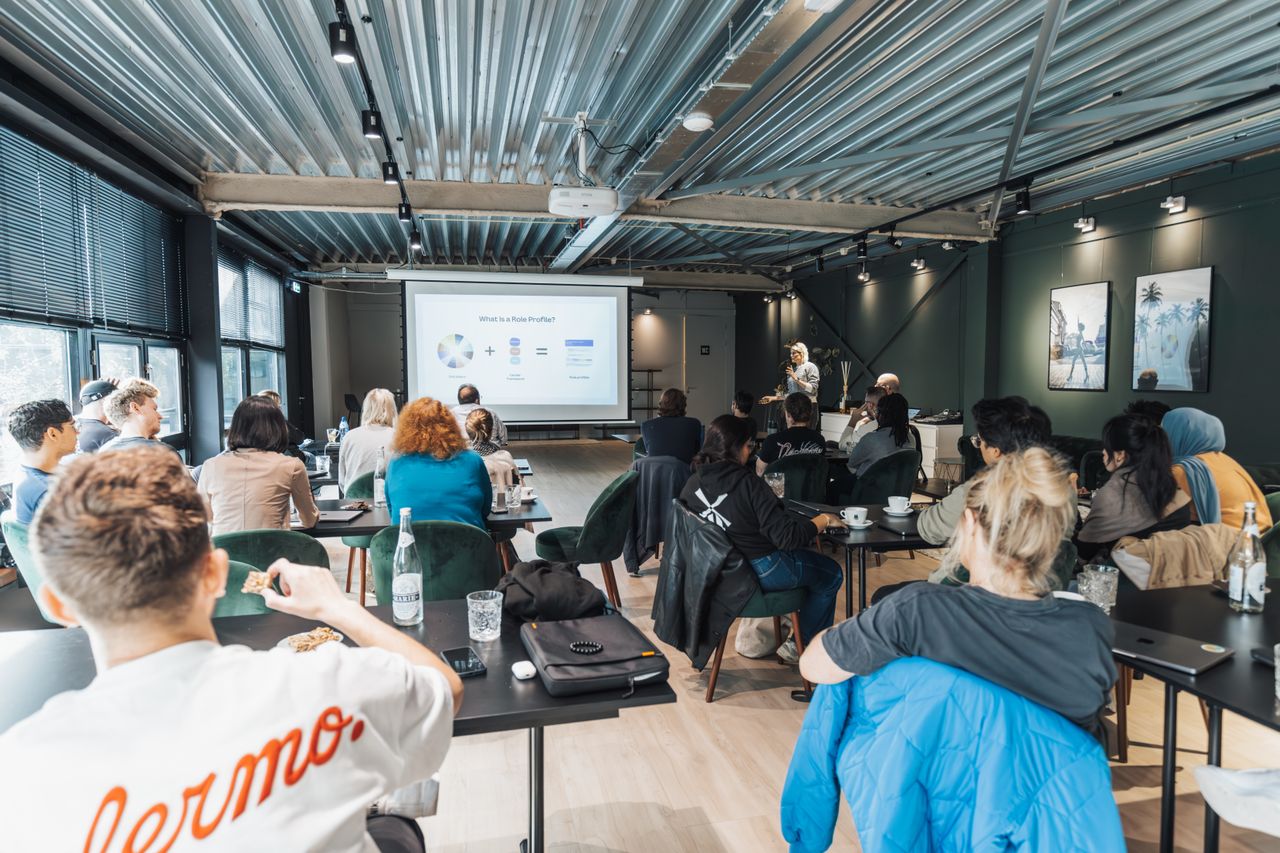
During the implementation of the HMI2Market project, the cooperation evolved from initial discussions and networking into concrete joint activities. One of the most visible examples was the 110th GDG Sarajevo event, hosted at University SSST and dedicated to Game Development in Bosnia and Herzegovina.
The event gathered approximately 50 participants from diverse backgrounds, including students, software developers, engineers, founders, directors, and academic staff. This diversity created an open environment for discussion, networking, and exchange of experiences between academia and industry professionals. The program combined educational and interactive elements. The event was opened by Nijaz Andelić, member of the GDG community and host of the event, who introduced the speakers and highlighted the importance of hosting the event at University SSST.
The central TechTalk was delivered by Edin Kulović, who presented an overview of game development through a creative and visually engaging presentation inspired by the style of a 2D game. The event continued with a panel discussion featuring Damir Halilović (Director of Mad Head Games), Dino Trnka, Edin Kulović and Slaven Ahmetović. The panelists openly discussed their professional journeys, the realities of building games in Bosnia and Herzegovina, and the challenges of developing projects within the local creative and technology industries. One of the most memorable messages shared during the event was: “Starting a project is easy, but finishing it is hard, so start, build, and finish.” This message resonated strongly with students and early-career developers, encouraging them to approach innovation with persistence, discipline, and practical action.
In addition to expert discussions, the event also included an interactive pub quiz, presentations of locally developed games, and informal networking sessions that continued throughout the evening. The strong engagement of participants demonstrated the growing interest in game development and digital innovation within the local community.
The partnership between University SSST and GDG Sarajevo highlights the value of combining different perspectives and capacities. University SSST contributed academic infrastructure, student engagement, and an institutional platform for collaboration, while GDG Sarajevo brought community expertise, industry connections, practical experience, and direct access to professionals from the technology sector.
Beyond the event itself, the cooperation created a basis for future joint activities, including workshops, lectures, mentoring opportunities, and other community-oriented initiatives. More importantly, it strengthened trust and communication between academia and the local innovation community, demonstrating how cross-sector collaboration can contribute to a more connected and sustainable innovation ecosystem.
The experience also showed that meaningful partnerships require openness, continuous communication, and shared goals. By creating opportunities for direct interaction between students, professionals, researchers, and innovation actors, the partnership helped bridge the gap between academic learning and real industry practice.
Through HMI2MARKET, partnerships like this demonstrate that innovation ecosystems are built through collaboration, shared knowledge, and long-term engagement between institutions and communities.
Key Message
Sustainable innovation grows when universities, students, and technology communities work together, combining knowledge, practical experience, and shared ambition to create long-term impact.